Varanasi Itinerary 3 Days: How to Actually Experience the City of Moksha
📅 Updated June 2026🕐 12 min read🏭 First-time visitor friendly🌐 Uttar Pradesh, India
Nobody really prepares you for Varanasi. You can read every guide, watch every reel, and still arrive completely unprepared for a city that asks you — quite sincerely — to think about life and death before breakfast.
Varanasi — also known as Kashi, Banaras, or the City of Light — is one of the oldest continuously inhabited cities in the world. Sitting on a crescent bend of the Ganges in Uttar Pradesh, it draws millions of pilgrims, curious travellers, backpackers, and photographers every year. And yet, almost nobody agrees on how to describe it.
Some call it overwhelming. Others say it changed their life. Most say both. Three days here won’t make you a Kashi expert, but it’s enough to see through the noise, find the city’s actual rhythm, and come back with stories that don’t sound like anyone else’s trip. This itinerary is built for real travel — layered, honest, and with actual breathing room.
Day 1
The Ghats, the River & the Fire
Your first day is about getting acquainted with Varanasi on its own terms — starting at the water, where the city’s entire spiritual life plays out.
⏰ Early alarm
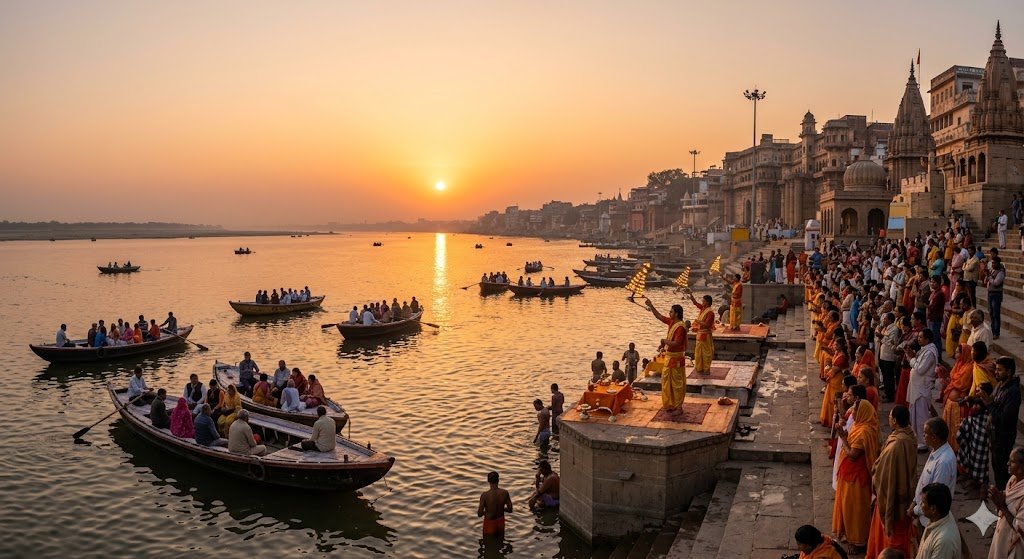
Set your alarm for 5:00 AM. This is non-negotiable. The Ganges at sunrise is rose-gold, the air is cool, the ghats are alive with prayers. Sleep through it and you’ve missed the reason to be here.
1
5:30 AM
Sunrise boat ride on the Ganges
Head to Assi Ghat or Dashashwamedh Ghat and hire a wooden rowboat (₹200–400 for an hour). Float past sadhus in prayer, families performing rituals, Brahmin priests at the water’s edge. Don’t rush. Just watch.
2
7:00 AM
Breakfast at Assi Ghat
Order kachori sabzi — the Banarasi version is a world apart from what you’ve had elsewhere — with a glass of chai. Sit on the ghat steps and watch life happen around you.
3
8:30 AM
Walk the ghats: Assi to Dasaswamedh (3 km)
Pass Tulsi Ghat, the heritage Darbhanga palace facade, quiet Rajendra Prasad Ghat, and arrive at Dasaswamedh — the ceremonial centre of the city. Each ghat has its own character and story.
4
10:30 AM
Manikarnika Ghat — with deep respect
Varanasi’s main cremation ground, where fire has reportedly burned continuously for thousands of years. Death here is visible and sacred — not morbid, but honest. No photography. Follow instructions from those present.
5
12:30 PM
Lunch and proper rest
The sensory intensity of the morning warrants a real break. Many guesthouses in the Assi or Godowlia area have rooftop restaurants with Ganges views. Eat, rest, and recharge for the evening.
6
5:00 PM
Ganga Aarti at Dasaswamedh Ghat
Arrive by 6 PM for a spot. The ceremony starts around 6:30 PM — seven priests perform simultaneously, swinging enormous brass lamps to Vedic chanting. Theatrical and deeply sincere at once. Hire a boat for the floating front-row view.
7
8:00 PM
Dinner in the old city lanes
Try tamatar chaat at Deena Chaat Bhandar near Dasaswamedh — mashed tomatoes, potatoes, and spice unlike anything else in India. Finish with thick, fruit-topped lassi from the famous Blue Lassi Shop (open since the 1920s).
Day 2
Temples, Sarnath & the Silk Markets
Day 2 moves between the sacred and the historical — from the holiest Shiva temple in Hinduism to the site where Buddhism began.
1
6:30 AM
Kaal Bhairav Temple — the first darshan
Tradition says Baba Kaal Bhairav is the “Kotwal of Kashi” — the divine caretaker. Visiting here before Kashi Vishwanath is essential per local custom. Atmospheric, unapologetically local. The prasad is a small cup of whisky. Don’t be surprised.
2
7:30 AM
Kashi Vishwanath Temple
One of the twelve Jyotirlingas — arguably the most important Shiva temple in India. The Kashi Vishwanath Corridor has transformed access. Go before 9 AM to beat the lines. Non-Hindus permitted with valid government ID.
3
9:00 AM
Annapurna Temple & Sankat Mochan Hanuman Temple
Annapurna is dedicated to the goddess of nourishment. Sankat Mochan, established by Tulsidas, sits in a quieter part of the city under large trees with resident monkeys. Its mood is calm rather than ceremonial.
4
11:00 AM
Sarnath — where Buddhism began (30 min drive)
Sarnath is where the Buddha gave his first sermon after attaining enlightenment. See the 6th-century Dhamek Stupa, the archaeological museum with India’s national emblem (Lion Capital of Ashoka), and the monastery ruins. A genuine half-day highlight.
5
1:30 PM
Lunch near Sarnath, return by 3 PM
Several clean restaurants near the archaeological site. Head back to Varanasi by early afternoon to leave time for the silk markets.
6
3:30 PM
Banarasi silk weaving workshops & markets
Varanasi is one of the world’s great weaving cities. Visit the Madanpura or Lallapura neighbourhoods to see weavers on traditional wooden looms. For shopping, Vishwanath Gali has plenty of shops — bargaining expected. Avoid synthetic substitutes.
7
6:30 PM
Evening at Assi Ghat
Assi in the evening is quieter than Dasaswamedh — students from BHU, musicians practising on the steps, travellers by the river. A smaller aarti happens here too. The kind of evening that doesn’t photograph well but feels exactly right.
👕 Dress code
Cover shoulders and knees for all temples. A thin dupatta or scarf in your bag doubles as temple cover and sun shade. Slip-on shoes save time at multiple entry points.
Day 3
The Quiet Side of Kashi
Most travellers pack Day 3 with everything they didn’t do yet. Don’t. This is where you slow down and let Varanasi actually show you something it doesn’t show everyone.
1
6:00 AM
Second sunrise — go north this time
Ask the boatman to head north — past Manikarnika, past Panchganga Ghat. The ghats thin out here. Dhobis slapping laundry, boys at riverside wrestling akharas, old men simply sitting. This is Varanasi when it isn’t performing for visitors.
2
8:00 AM
Breakfast off the tourist trail
Ask your guesthouse owner where they eat breakfast. A residential-lane dhaba serving fresh kachori, jalebi, and chai is worth the ten-minute walk. Eat where locals eat. The bill will be a fraction of tourist-facing places.
3
9:30 AM
Ramnagar Fort — across the river
Take a boat or use a bridge to the eastern bank. The 18th-century sandstone fort was the Maharaja of Banaras’s seat — now a museum with vintage cars, royal artefacts, and astronomical instruments. Offers a skyline view of Varanasi most visitors never see.
4
12:00 PM
BHU campus & Bharat Kala Bhavan museum
One of India’s largest universities — spacious, leafy, a welcome contrast to the dense old city. Bharat Kala Bhavan is an underrated museum of miniature paintings, textiles, and 5,000+ years of Indian civilisation. The campus Vishwanath Temple is architecturally striking and far less crowded.
5
3:00 PM
Final ghat walk — your own pace
Spend your last afternoon walking whichever stretch feels unfinished. Sit somewhere. Buy a chai. After three days in Varanasi, you’ll notice things you missed on Day 1. The city reveals itself gradually and never quite completely.
6
6:30 PM
Evening — your call
Catch the Ganga Aarti again (it’s different every time) — or find a Banaras gharana classical music performance. A Hindustani vocal or sarangi concert near Assi Ghat is an experience that belongs entirely to this city.
🍳
What to eat in Varanasi
Varanasi has one of India’s most distinctive food cultures — unapologetically local, historically deep, and almost entirely vegetarian. Many traditional establishments cook without onion or garlic, which forces cooks to work with subtler spice profiles. They do it brilliantly.
Kachori Sabzi
The definitive Banarasi breakfast. Crispy lentil pastry + tangy potato curry. Best near Godowlia market, mornings only.
Tamatar Chaat
Mashed tomatoes, potato, and spice. Try it at Deena Chaat Bhandar near Dasaswamedh. Unlike anything else in India.
Blue Lassi
Thick yoghurt, fresh fruit, perfectly sweet. The Blue Lassi Shop in Vishwanath Gali has been open since the 1920s.
Malaiyyo
Winter only. Frothy saffron-tinged milk dessert sold at dawn. You need to be up early to find it.
Banarasi Paan
The traditional finish to any Varanasi meal. Ask for meetha paan (sweet, without tobacco) for your first try.
Thandai
Spiced milk drink with almonds, fennel, and rose. Perfect cooling drink in the afternoons.
Malai Toast
Thick toast slathered with fresh cream and sugar. A Banaras morning ritual at small local cafes.
Chena Dahi Vada
Soft lentil dumplings in spiced yoghurt. A lighter alternative to the heavier street snacks.
📍
Practical tips for Varanasi
🧭
Use the river as your compass
The old city lanes are confusing by design. Walking toward the river from any lane eventually brings you to a ghat. If you can see the Ganges, you’re oriented.
📷
Photography etiquette
Ghats are largely photographic, but Manikarnika is strictly no-camera. Always ask before photographing people at prayer. Most nod; some decline. Respect both equally.
🚫
Tout awareness
Persistent touts near Dasaswamedh and Kashi Vishwanath. A firm “no thank you” and continued walking is the move. Don’t engage with “free chai” offers.
💧
Water & food safety
No tap water anywhere. Stick to sealed bottles. Eat from busy stalls where turnover is high. Pack a basic travel medicine kit just in case.
👕
What to wear
Cover shoulders and knees for temple visits. Light, breathable cotton is ideal. Slip-on shoes save time at multiple temple entry points each day.
🚌
Getting around
E-rickshaws for the ghat area from your hotel. Book a cab or auto for Sarnath, BHU, and Ramnagar Fort. The old city itself is walk-only territory.
❓
Frequently asked questions
7 questions
Three days is the practical sweet spot. You can comfortably cover the major ghats, Kashi Vishwanath Temple, Sarnath, the Ganga Aarti, and have time for street food and genuine wandering — without burning out by Day 2. One day is a highlight reel. A week is for deep immersion. Three gives you layers.
October to March, without question. Mornings on the ghats are crisp but not cold, days are sunny and walkable, evenings call for a light jacket. November is particularly special if you can time it for Dev Deepawali — the entire riverfront glows with hundreds of thousands of earthen lamps. Avoid May and June when temperatures can reach 42–45°C.
The Ganga Aarti is a nightly fire-offering ritual at Dasaswamedh Ghat — performed every single evening without exception. Seven priests perform the ceremony simultaneously using enormous brass lamps, incense, and conch shells, accompanied by Vedic chanting. In winter it begins around 6:30 PM and lasts 45–60 minutes. Arrive by 6 PM for a spot, or hire a boat for a floating view from the river.
Yes. After the renovation and opening of the Kashi Vishwanath Corridor, non-Hindu visitors are permitted to enter many parts of the complex. Bring a valid government-issued photo ID (passport or Aadhaar card). Some inner sanctum areas remain restricted. Dress modestly — cover shoulders and knees — remove footwear, and follow instructions from temple staff at the entry points.
The Assi Ghat area is ideal for first-time visitors — close to the river, walkable, and with a good mix of guesthouses, cafes, and genuine local neighbourhood feel. Godowlia puts you nearest to Kashi Vishwanath and Dasaswamedh Ghat but is louder and more congested. For mid-range or luxury hotels with more comfort, the Cantonment area works well — just accept a 15-minute ride to the ghats each morning.
Generally yes, for both men and women. The ghat areas are crowded and well-watched during the day and evening. Standard precautions apply: stay alert around tourist hotspots, don’t accept food or drink from strangers, and keep valuables secured. Solo female travellers should dress conservatively in temple areas and be prepared for some attention in crowded lanes — a clear, confident manner goes a long way.
Sarnath is where the Buddha delivered his very first sermon after attaining enlightenment, making it one of the four holiest sites in Buddhism. It’s about 10 km from central Varanasi — roughly 30 minutes by auto. The Dhamek Stupa (a 6th-century monument marking the exact sermon site), the archaeological museum housing the original Lion Capital of Ashoka (India’s national emblem), and the peaceful ruins of ancient monasteries make it an absolutely worthwhile half-day visit — especially interesting for visitors coming from Varanasi’s Hindu spiritual context.
One last thing about Varanasi
The city doesn’t try to be photogenic. It doesn’t curate itself for visitors. What you see is exactly what it is — ancient, loud, sacred, alive in a way most cities stopped being centuries ago. Three days won’t be enough to understand it. But they’ll be enough to feel it. And that’s what you’ll carry home.