
Ganga Aarti Timing (Varanasi)
Ganga Aarti Timings
in Varanasi — 2026
Every evening, the ancient ghats of Kashi light up in a symphony of fire, chant, and devotion. Know exactly when to be there — so you don’t miss a single flame.
What Is the Ganga Aarti?
If there is one ritual in Varanasi that stays with you long after you leave, it is the Ganga Aarti. Every evening without fail — rain, heat, or fog — the priests arrive, the lamps are lit, and the river comes alive.
The evening Ganga Aarti at Dashashwamedh Ghat begins at 6:45 PM (winter) and 7:15 PM (summer). The morning Subah-e-Banaras aarti at Assi Ghat starts at 5:00–6:00 AM, depending on the season.
Ganga Aarti is a daily worship ceremony performed on the banks of the Ganges. In Varanasi, it is conducted at three main ghats — Dashashwamedh Ghat, Assi Ghat, and Rajendra Prasad Ghat — each with its own character and timing.
The word “aarti” comes from the Sanskrit tradition of offering light to the divine. Priests hold large multi-tiered brass lamps and move them in sweeping circular motions while devotees sing hymns, blow conch shells, and ring bells. It is not just a ceremony — it is Varanasi’s daily heartbeat.
Witnessing it is free, open to everyone regardless of religion, and deeply moving. Whether you are a pilgrim completing a sacred journey or a first-time visitor, the Ganga Aarti is non-negotiable on any Varanasi itinerary.
Ganga Aarti Timings — All Ghats
The timings shift across seasons because they track the sunset and sunrise. Here are current 2026 timings for all major ghats:
Duration: ~45–60 minutes. Seven priests perform simultaneously. Arrive 30 min early for a good spot.
A quieter, more intimate experience. Classical music, yoga, and sunrise over the Ganges.
Less crowded than Dashashwamedh. A good alternative for a calmer viewing experience.
Month-by-Month Aarti Timing Reference
Planning ahead? The table below gives approximate Dashashwamedh Ghat evening aarti start times across all twelve months of 2026:
| Month | Season | Aarti Start Time | Duration |
|---|---|---|---|
| January | Winter | 6:30 PM | ~45 min |
| February | Winter | 6:45 PM | ~45 min |
| March | Spring | 7:00 PM | ~50 min |
| April | Spring | 7:10 PM | ~50 min |
| May | Summer | 7:15 PM | ~45 min |
| June | Summer / Monsoon | 7:15 PM | ~45 min |
| July | Monsoon | 7:10 PM | ~45 min |
| August | Monsoon | 6:55 PM | ~45 min |
| September | Post-Monsoon | 6:30 PM | ~50 min |
| October | Autumn | 6:15 PM | ~55 min |
| November | Early Winter | 5:45 PM | ~55 min |
| December | Winter | 5:45 PM | ~55 min |
🕬 Note on Timings
These timings are approximate and follow the seasonal sunset schedule. The priests begin the aarti close to dusk, so timings can shift by 5–10 minutes on any given day. For the most accurate time, check with your hotel or arrive 30 minutes early.
The Dashashwamedh Aarti — What to Expect
Of all the ghats in Varanasi, Dashashwamedh Ghat hosts the grandest Ganga Aarti. The ceremony here has been performed every single day for decades — and it shows. Everything is choreographed down to the last gesture.
Setting Up (Before the Aarti)
About 30 minutes before the aarti begins, priests start arranging the large brass lamps on elevated platforms. The ghat fills quickly — locals, pilgrims, and travellers converging from every direction. Vendors sell flower diyas (small floating lamps) for you to release onto the river. If you are on a boat, you get an unobstructed panoramic view of all seven priests at once.
The Ceremony Itself
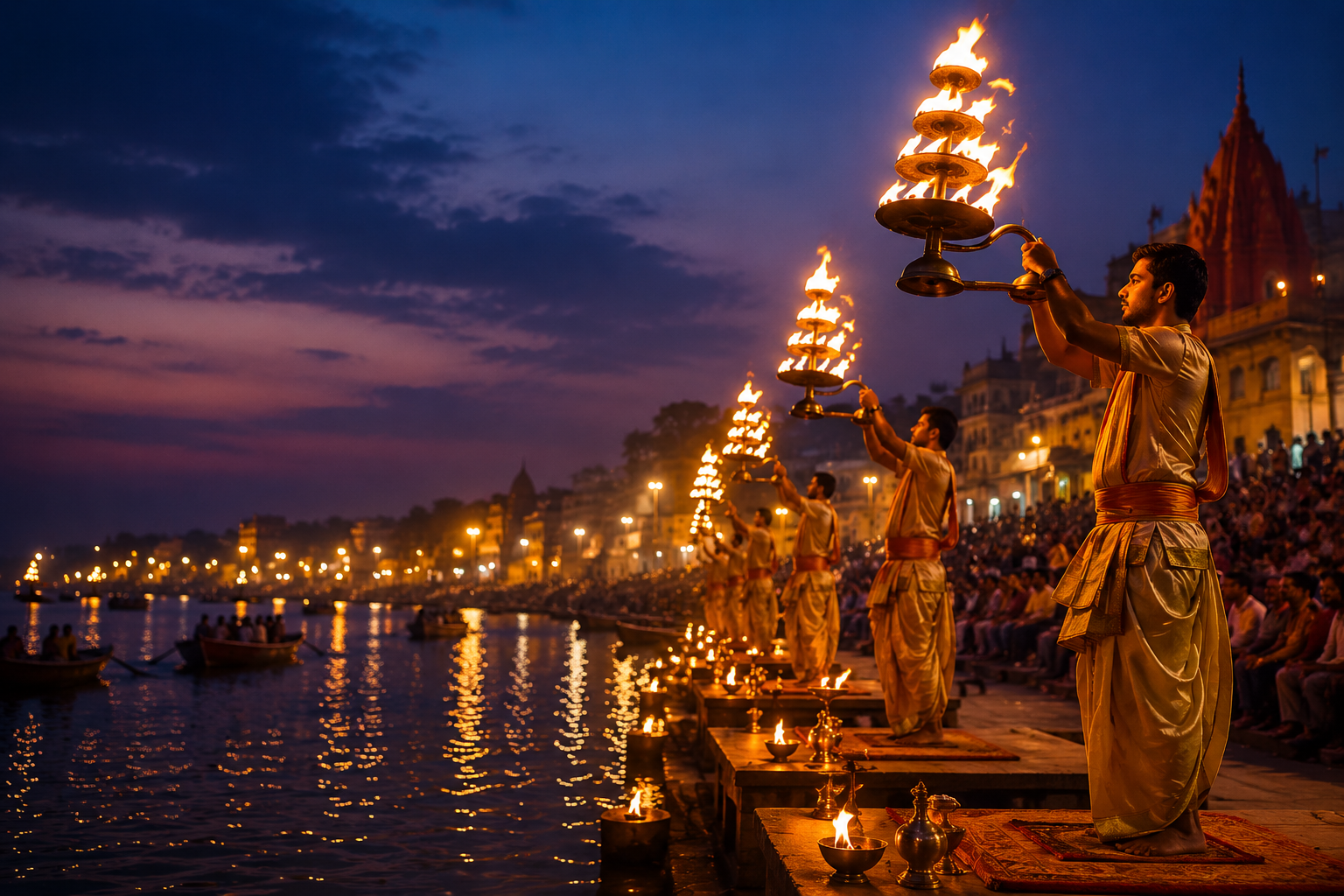
Seven young priests — dressed in matching saffron dhoti-kurtas — take their positions simultaneously. The ceremony opens with the blowing of a conch shell, which cuts through the noise of the crowd and signals the beginning. From there, the ritual moves through several stages: incense sticks, large white fans, and finally the towering multi-tiered fire lamps that the ceremony is famous for.
The lamps are moved in graceful circular arcs, synchronised across all seven priests. The sound of the temple bells, the chanting, the river breeze, and the glow of hundreds of lamps reflecting on the Ganges — it is impossible to describe adequately in words.
After the Aarti
The ceremony ends with the aarti lamps being passed through the crowd. Devotees reach out briefly to receive the warmth of the sacred fire. Many stay on the steps afterward, releasing their diyas onto the river and watching them drift out into the dark water — a moment of unexpected stillness after the ceremony’s intensity.
Practical Tips for Attending Ganga Aarti
-
⏱Arrive 30–45 Minutes Early The ghats fill up fast. A good spot on the steps — or a calm boat seat — requires you to be there well before the aarti begins.
-
🚣Take a Boat for the Best View A boat on the river gives you a panoramic view of the entire ceremony with all seven priests visible. Negotiate the rate before boarding — expect Rs 100–300 per person.
-
📷Put Your Phone Down (At Least Once) It is tempting to record everything, but give yourself 5 full minutes to just watch. The aarti deserves to be experienced, not only documented.
-
🗑Wear Easy Footwear The ghat steps are sacred ground. Removing your shoes is customary — slip-on sandals make this much easier.
-
🌾Visit During Dev Deepawali If you can, time your visit around Dev Deepawali (November), when over a million lamps illuminate all 84 ghats simultaneously. Truly extraordinary.
-
🌞Don’t Skip the Morning Aarti Either The Assi Ghat morning aarti (Subah-e-Banaras) is quieter, more spiritual, with classical music at sunrise. Worth the early alarm.
-
🌧The Aarti Happens Rain or Shine Do not let the monsoon deter you. The aarti never stops — and watching it in the rain, with the river swollen and dramatic, is its own kind of magic.
Explore More Varanasi
Planning your Varanasi trip? These guides will help you make the most of your time in Kashi:
Frequently Asked Questions
Everything you need to know before attending the Ganga Aarti in Varanasi.
© 2026 KashiBanaras.com · All timings are approximate and subject to seasonal variation. Always confirm locally on the day of your visit.